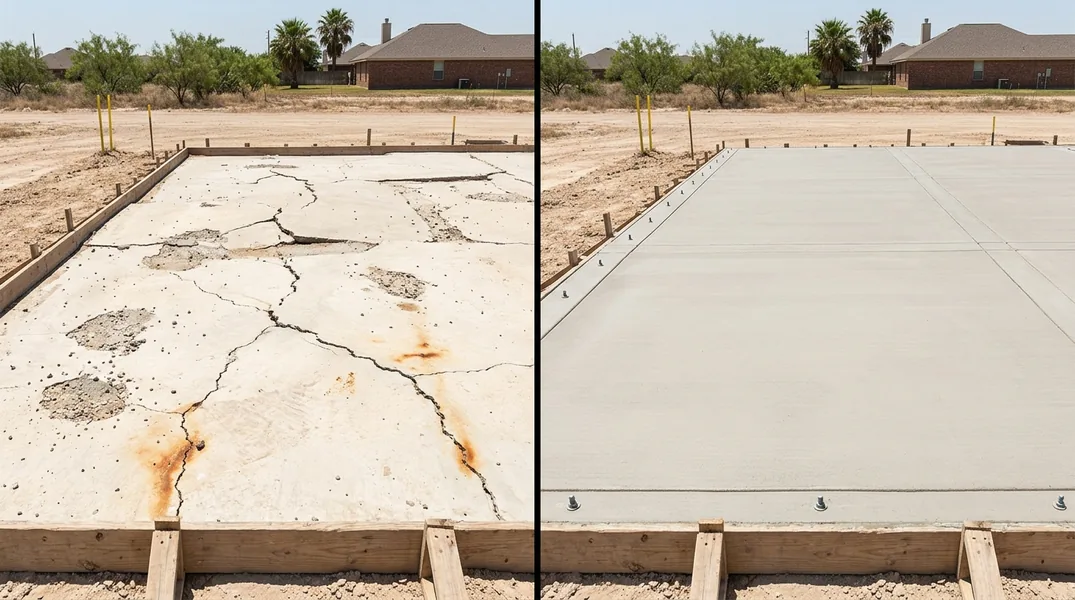
Understanding New Construction Concrete Slabs in Laredo, Texas
Buying a new construction home in Laredo is an exciting milestone, but it comes with responsibilities that many first-time homebuyers overlook. One of the most critical structural elements of any new home is the foundation concrete slab. Unlike older homes where you might inherit decades of history, new construction gives you the opportunity to catch foundation issues before they become expensive problems. Understanding what you're looking at when you inspect a new concrete slab can save you thousands of dollars down the road.
The concrete slab serves as the base for your entire home. It supports the weight of walls, roof, and everything inside. In Laredo's climate, where temperature fluctuations and occasional moisture issues can stress concrete, the quality of that initial pour matters enormously. New construction slabs are typically four to six inches thick and should be reinforced with rebar or wire mesh to prevent cracking. The builder's responsibility is to ensure proper grading, drainage, and curing during the initial construction phase, but your job as the buyer is to verify that these standards were actually met.
What to Look for During Your Builder Foundation Inspection
A thorough builder foundation inspection is one of the most important steps in the closing process. Before you sign final paperwork, you should walk the property with a qualified inspector who understands concrete construction. Look for visible cracks in the slab, particularly any that are wider than one-eighth inch or that run in patterns. Small hairline cracks are sometimes normal as concrete cures, but larger or multiple cracks can indicate settling issues, poor concrete mix, or inadequate reinforcement during the pour.
Beyond just cracks, pay attention to the overall levelness of the slab. Use a straightedge or ask your inspector to check for high spots or depressions that could cause water pooling or future settling problems. Check whether the slab slopes away from the home's foundation properly for drainage. You should also inspect the perimeter where the slab meets the stem wall or foundation edge. Any gaps, separation, or signs of movement here are red flags. Additionally, look for evidence of water damage, staining, or efflorescence (white powder residue), which can indicate moisture intrusion or poor site preparation before the concrete was poured.
New Home Foundation Warranty: What's Actually Covered
Most builders in Texas offer a new home foundation warranty as part of their standard package, but these warranties vary significantly in scope and duration. Typically, structural defects in the foundation are covered for one year from closing, with some builders extending coverage to two or three years. However, it's critical to read the fine print. Many warranties exclude cracks under a certain width, settling that falls within specified tolerances, and damage caused by soil conditions or drainage issues on the homeowner's side of the property line.
Understanding what your warranty covers helps you identify what issues to document and report before the warranty period expires. If you notice cracks or movement after closing, contact your builder immediately and request a formal inspection under warranty. Take photographs and measurements of any concerns. Document the date you first noticed the issue. Some builders require notification within specific timeframes, and missing those deadlines could void your coverage. Additionally, ask your builder about the specific concrete specifications used for your slab, including the PSI (pounds per square inch) rating, air entrainment levels, and curing procedures. This information helps establish whether the slab was constructed to proper standards.
Climate Considerations for Concrete Slabs in Laredo
South Texas presents unique challenges for concrete durability. The region experiences significant temperature swings, particularly between seasons, and occasional heavy rainfall followed by extended dry periods. These conditions can cause concrete to expand and contract repeatedly, leading to cracking over time. When evaluating a new construction slab in Laredo, consider whether the builder used air-entrained concrete, which includes tiny air pockets that allow the material to withstand freeze-thaw cycles better. Ask your builder about the concrete's water-to-cement ratio and whether any additives were used to improve durability in local conditions.
Drainage is particularly important given the area's rainfall patterns. The slab should be positioned so water runs away from the foundation, not toward it. Check that gutters and downspouts are installed to direct roof water at least four to six feet away from the home's perimeter. Poor drainage can cause soil erosion, settlement, and eventually foundation movement. If the builder has not yet installed landscaping, you have an opportunity to plan your yard's grading to protect the foundation. These preventive measures, taken early, can extend the life of your concrete slab significantly and prevent costly Concrete Repair and Resurfacing work later.
When to Call a Professional for Your New Slab Assessment
While you should always perform your own visual inspection, having a professional concrete contractor evaluate a new construction slab before closing is a wise investment. A qualified contractor can identify subtle issues that untrained eyes might miss and can provide documentation that protects you if problems emerge later. They can assess whether the slab meets local building codes and industry standards. If you're purchasing in Laredo and want expert guidance on your new home's foundation, the team at Laredo Concrete Contractors can provide a thorough evaluation and honest assessment of the work.
Professional inspectors can also recommend preventive measures to protect your slab long-term. This might include sealing recommendations, drainage improvements, or landscaping adjustments. They can explain what minor cracking is acceptable and what issues warrant builder follow-up. Having this expert perspective in writing before you close gives you leverage if problems arise and provides a baseline for future reference. If you'd like to schedule a professional assessment of your new construction slab, contact Laredo Concrete Contractors at (956) 477-3546 or request a free estimate to discuss your specific situation.
Protecting Your Investment After Closing
Once you've closed on your new construction home, your responsibility for maintaining the concrete slab begins. Even a perfectly poured slab requires proper care to perform well for decades. Keep the area around your home graded to shed water away from the foundation. Avoid planting trees or large shrubs too close to the slab, as root growth can eventually cause movement. If you plan to add Concrete Driveways, Concrete Patios, or other concrete features to your property, ensure they're properly installed with adequate drainage and don't trap water against the foundation.
Monitor your slab periodically for any changes. Take photos of the foundation area every few months during the first year after closing, and annually thereafter. This creates a record of any movement or cracking that develops over time. If you notice new cracks or signs of settling, report them to your builder if still under warranty. For long-term maintenance questions or if you need professional advice about protecting your slab, Laredo Concrete Contractors is here to help. Whether you're dealing with foundation concerns or planning concrete improvements to your new home, call (956) 477-3546 today to discuss your needs with experienced local professionals.
Looking for a professional concrete contractor in Laredo? Laredo Concrete Contractors responds fast for all your concrete needs.
Get a Free QuoteOur services: Concrete Driveways · Concrete Patios · Stamped & Decorative Concrete